





Skip to content

Why Walt Disney Was Grateful for His Rivals: The Surprising Power of Competition

A Quote By Walt Disney

I have been up against tough competition all my life. I wouldn't know how to get along without it.

Walt Disney

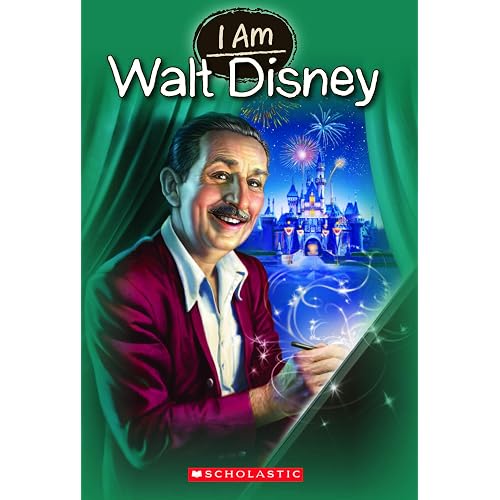
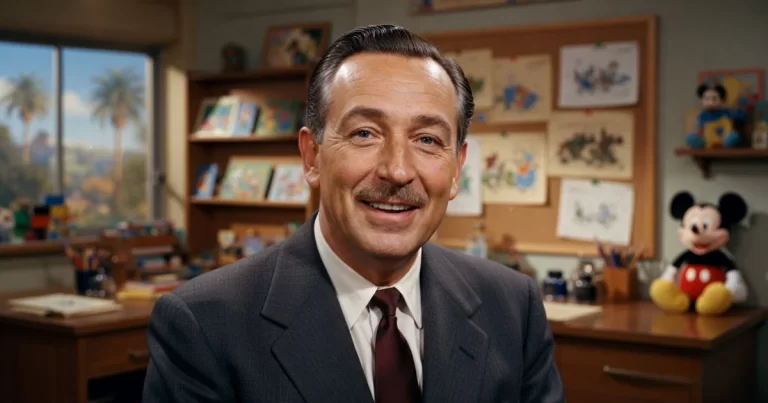
Profile Image Of Walt Disney
Walt Disney
Pioneering Animator And Entertainment Visionary
Walt Disney was a pioneering animator and entrepreneur who created Mickey Mouse and built a global entertainment empire that transformed animation and theme parks.

Explanation Of The Quote

Synopsis
Most people treat competition as something to be endured or overcome. Walt Disney treated it as something closer to a necessity, a force that sharpened his thinking, raised his standards, and pushed him toward work he might never have attempted in its absence. This post explores how Disney’s relationship with competition shaped his greatest achievements, and what it looks like to genuinely welcome the pressure of being challenged.

There is something almost startling about this quote when you first read it. Here is a man who dominated his industry for decades, whose studio produced work that competitors openly admitted they could not match, saying with complete sincerity that he would not know how to get along without tough competition. Not that he had survived it. Not that he had defeated it. That he needed it. That it was, in some fundamental way, part of how he worked.

To understand why he felt this way, you have to look at what competition actually did to Walt Disney throughout his career.

Competition as the Standard-Setter

When Walt Disney was building his animation studio in the late 1920s and early 1930s, the bar set by competitors was low. Most animated cartoons of the era were crudely drawn, loosely timed, and designed primarily to fill a few minutes before the main feature. Disney could have matched that standard and been commercially successful. Instead, he pushed his studio to a level of draftsmanship, movement, and storytelling that the industry had never seen, partly because he was acutely aware that any competitor could close the gap if he stopped raising it.

The result was a feedback loop that produced extraordinary work. Because Disney refused to be satisfied with what his rivals were doing, his studio invented new techniques, developed new methods of character animation, and raised the craft to a point where Snow White and the Seven Dwarfs could credibly be called the first feature-length animated film to achieve genuine emotional depth. That film did not emerge from a vacuum. It emerged from a decade of intense competitive pressure that Disney had internalized and transformed into creative fuel.

The Rivals Who Made Him Better

Throughout his career, Walt Disney faced competitors who were talented, well-funded, and genuinely threatening. The Fleischer Studios, responsible for Betty Boop and Popeye, were serious rivals in the 1930s with a distinct visual style and a loyal audience. MGM and Warner Bros. both ran animation divisions that produced beloved characters of their own. In the theme park space, rival parks were watching Disneyland closely and working to replicate its success.

In each case, competition did not diminish Disney’s output. It focused it. Knowing that talented rivals were working hard sharpened his attention to quality, pushed him to take creative risks that a monopolist might have avoided, and kept him from the complacency that tends to set in when there is nothing pressing you from behind.

Walt Disney was also, by temperament, someone who performed better under pressure than without it. His most creatively fertile periods coincided with moments of intense competitive or financial pressure. The early Mickey Mouse shorts, produced when the studio was struggling for survival. Snow White, conceived when the studio needed a breakthrough to remain viable. Disneyland, built when the film division was in a commercially difficult period and Walt needed a new arena entirely. Pressure, for Disney, was not a drag on creativity. It was one of its primary triggers.

What It Really Means to Welcome Competition

Welcoming competition is not the same as being indifferent to winning. Walt Disney competed ferociously. He cared deeply about being the best, and he invested enormous energy in ensuring his studio produced work that no rival could honestly claim to match. The difference between his attitude and a purely defensive competitive stance is that he did not experience rivals as threats to be neutralized. He experienced them as evidence that the work mattered enough for others to want a share of it, and as a useful external source of pressure that kept his own standards honest.

This is a subtle but important distinction. When you see a competitor primarily as a threat, your energy goes into protection, into defending what you have built, into preventing others from gaining ground. When you see a competitor as a useful adversary, your energy goes into improvement. You ask not how to stop them, but how to be better than them, which is a question that tends to produce far more interesting answers.

Walt Disney spent his life asking the second question. He died in 1966 having never fully resolved the competition, because competition in a living industry is never fully resolved. But he had used it, consistently and brilliantly, to become something greater than he might have been in its absence. That, perhaps, is the finest thing you can say about anyone’s relationship with the rivals life sends their way.

Your toughest competitor may be the one quietly making you your best.

Recommended Reads

More On Walt Disney

More Personalities

profile image of monica bellucci
Monica Bellucci
profile image of charlie kirk
Charlie Kirk
Elon Musk
Elon Musk
Epictetus
Epictetus
Enid Blyton
Enid Blyton
Paul Walker
Paul Walker
Epicurus
Epicurus
Rumi
Rumi
Charlie Chaplin
Charlie Chaplin
Julius Caesar
Julius Caesar
Khalil Gibran
Khalil Gibran
Alexander the Great
Alexander The Great