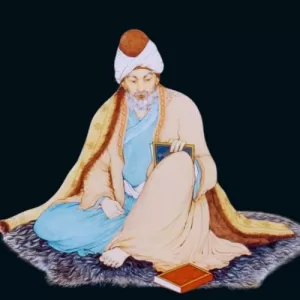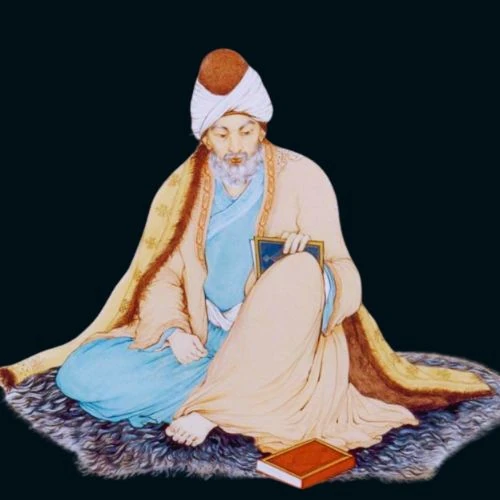
Jalāl ad-Dīn Muhammad Rūmī, commonly known simply as Rumi, was born on September 30, 1207, in Balkh, in present-day Afghanistan. A 13th-century Persian poet, Islamic scholar, theologian, and Sufi mystic, Rumi is widely regarded as one of the greatest spiritual masters and literary figures of all time. His family fled political unrest, eventually settling in Konya, in what is now Turkey.
Deeply influenced by his spiritual companion Shams-e-Tabrizi, Rumi experienced a profound spiritual transformation that inspired much of his poetry. After Shams mysteriously disappeared, Rumi’s grief and longing fueled the creation of thousands of verses, weaving themes of divine love, unity, and transcendence.
His major works, including the Masnavi and Divan-e Shams-e Tabrizi, remain cornerstones of Persian literature and Sufi thought. Rumi’s legacy endures globally, transcending religious and linguistic boundaries, and his verses are celebrated for their depth, universality, and lyrical beauty. He died on December 17, 1273, in Konya, where his tomb continues to attract visitors from around the world.