








Previous Quote
The Gift Hidden in the Struggle: What Walt Disney Learned From His Hardest Moments
A Quote By Walt Disney
All the adversity I've had in my life, all my troubles and obstacles, have strengthened me... You may not realize it when it happens, but a kick in the teeth may be the best thing in the world for you.
Walt Disney
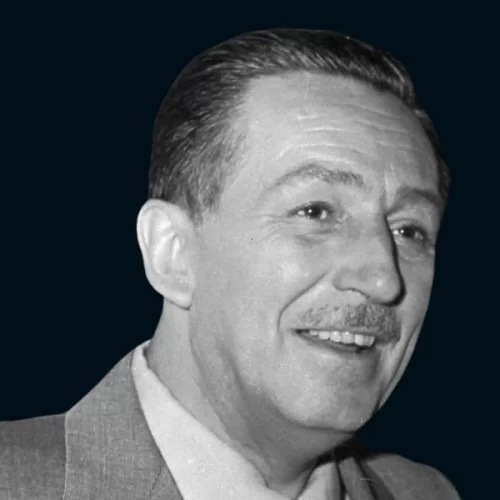
Walt Disney
Pioneering Animator And Entertainment Visionary
Walt Disney was a pioneering animator and entrepreneur who created Mickey Mouse and built a global entertainment empire that transformed animation and theme parks.
Explanation Of The Quote
Synopsis
Walt Disney did not speak about adversity from a place of theory. He spoke from a life that handed him more setbacks, failures, and humiliations than most people could endure, and he emerged from each one with something he could not have gained any other way. This post explores what he meant by this unsentimental but deeply hopeful observation, and why the hardest moments of your life may be quietly doing you the greatest service.
There is a particular kind of wisdom that cannot be taught in a classroom or absorbed from a book. It can only be earned, slowly and often painfully, through the experience of falling short, being knocked back, and choosing to get up anyway. Walt Disney had that wisdom in abundance, and this quote is perhaps the most direct expression of it he ever offered.
It is worth noting that he does not say adversity is pleasant. He does not tell us to smile through difficulty or pretend that a kick in the teeth doesn’t hurt. He says, with characteristic honesty, that you may not realize what it is giving you when it happens. The gift arrives in disguise. Often an ugly one.
A Life That Earned the Right to Say This
Walt Disney was born in Chicago in 1901 and raised on a farm in Marceline, Missouri, under a father who was emotionally cold and financially unstable. The family moved repeatedly, chasing work and escaping debt. Walt’s childhood was not unhappy in all respects, but it was marked early by the understanding that nothing was guaranteed and comfort could be taken away without warning.
His first serious venture into animation, a Kansas City studio called Laugh-O-Gram, went bankrupt in 1923 when Walt was just twenty-one. He had poured everything into it, including money borrowed from family and friends. When it collapsed, he was left with little more than a suitcase and a train ticket to Hollywood. Most people at that age, facing that kind of public failure, would have quietly redirected their ambitions toward something safer. Walt did not. He arrived in California and started again.
Then came the Oswald blow. By the late 1920s, Walt had built a successful animated series around a character called Oswald the Lucky Rabbit. He traveled to New York to negotiate a better contract with his distributor, Charles Mintz, and discovered that Mintz had secretly signed away most of Walt’s animators and owned the rights to Oswald outright. Walt had been outmaneuvered completely. He returned to California having lost both his star character and most of his team.
That train ride back could have been the end of the story. Instead, it produced Mickey Mouse. Sitting on that train, processing the loss, Walt began sketching a new character. The adversity did not just fail to stop him. It redirected him toward something better than what he had lost.
Strength That Only Comes From Resistance
There is a principle in materials science that metals become stronger when subjected to stress. The process, called work hardening, involves the material’s internal structure reorganizing itself in response to pressure, becoming more resistant to future deformation. Walt Disney’s quote describes something remarkably similar happening in human beings.
Each obstacle he faced forced him to develop capacities he would not have found in smoother circumstances. The bankruptcy taught him about financial structure and the importance of owning his own intellectual property, a lesson that shaped every business decision he made afterward. The loss of Oswald taught him to never again surrender creative control to a distributor, which is why he retained ownership of everything he created from that point forward. The animators’ strike of 1941, which devastated him personally, pushed him to diversify beyond the studio into television, nature documentaries, and eventually theme parks.
In each case, the kick in the teeth was the thing that opened the next door. Not despite the pain it caused, but partly because of it. Comfort rarely forces growth. Adversity, by its nature, demands a response, and in that demand lies its hidden generosity.
What This Means When You Are In the Middle of It
The difficult truth about this quote is the part Disney acknowledges openly: you may not realize it when it happens. That is not a small caveat. When you are in the middle of a failure, a rejection, or a loss, it does not feel like strengthening. It feels like breaking. The gift is invisible at the moment it is being given.
This is where Disney’s wisdom requires an act of faith, not blind faith in a guaranteed outcome, but faith in your own capacity to grow through difficulty. The evidence for that faith is not abstract. It is biographical. Look back at your own life and identify the moments that changed you most profoundly. Chances are they were not the comfortable ones. They were the moments when something was taken from you, or something failed, or someone said no, and you had to find out what you were made of.
Walt Disney lost his first studio, lost his first major character, watched his most ambitious early films lose money, survived a strike that tore his studio apart, and was rejected by every bank he approached when trying to fund Disneyland. He built one of the most beloved creative empires in human history not in spite of those experiences, but with the strength they gave him.
The kick in the teeth, as he knew better than most, sometimes turns out to be the whole story.
What broke you open may have been exactly what let the light in.