Struggling to Concentrate? Here’s How to Build Strong Focus That Lasts
Share This:
Key Highlights
Improving your concentration levels is possible by creating a distraction-free environment and setting clear goals.
Your attention span can be strengthened with time management strategies like the Pomodoro technique.
Proper sleep, nutrition, and regular exercise are essential for boosting cognitive function and mental energy.
Mindfulness and meditation can train your brain to stay in the present moment.
Understanding the science behind focus helps you manage distractions and protect your brain health.
Do you find your mind drifting when you need to focus the most? You are not the only one. These days, the world is full of sounds and constant digital alerts. This makes it hard for many of us to pay attention. To overcome this, you need to learn how to improve focus and concentration.
However, you must know that focus and concentration does not improve overnight. It is a part of a journey that requires understanding why we get distracted and then take steps to overcome those obstacles.
This guide is here to show you simple, science-backed ways to improve your cognitive function. You will also find tips to help clear your mind and make it easier to stretch your attention span. If you follow the steps that we will show you here, we are confident that you will soon have better mental clarity and set yourself up for long-term success.
Table of Contents
Understanding Focus and Concentration
People often use the words ‘focus’ and ‘concentration’ for the same thing, but they are not exactly similar.
Focus means you put your attention on just one task.
Concentration means you hold that attention for some time. You can get better at both if you practice.
If you improve your attention span, you can stay in the present moment. This is good because it gives you more mental clarity and can help your cognitive function. The first step is to understand how these things work. Now, let’s look at what focus is and why it matters in your daily life.
What Is Focus and Why Does It Matter?
Focus means you say “yes” to one thing and “no” to other things, at least for some time. You need to cut out other options to give full attention to a task in your hand. This is how you get more done and reach your goals.
Why is it hard to keep your mind on one thing? For many people, it is not that they can’t focus. It is that they find it tough to pick what to focus on first. When there is a big deadline, you decide what to do and finish it. The hard part is making these choices before things feel urgent.
When you learn to put your mental focus on what matters, you get more done that really counts. If you work on your attention span, you can improve your cognitive performance. You can also feel that you have more control over your time and energy.
The Science Behind Concentration
Your brain is not made to do two things at the same time. When you try to multitask, your brain just jumps from one thing to another really fast. This switch makes you pay a mental price. It’s called “switching cost” and it uses up your cognitive resources and mental energy. This can also slow down your work.
Think about what happens when you get interrupted while writing an email. It takes a little time to remember what you were doing. You have to get your thoughts back. That same thing happens each time you switch to a new job. It makes your brain function less well and you waste mental energy, so it gets harder for you to do your work.
To make your cognitive function better, it’s good to not try to multitask. Working on only one thing at a time lets your brain work at its best. You get faster and better results because all your cognitive function and energy go into that one thing.
Common Reasons for Losing Focus
If you deal with poor concentration, you know how tough it can be. When your mind drifts, it often means you have too many things fighting for your attention. We all live in a world full of information overload, and it is easy for your focus to be pulled by so many things, like social media, every day.
Some of the top reasons that make it hard to stay focused are:
Constant notifications from social media and email
A cluttered or noisy place to work
Things inside your head, like stress or worry
Many of us think multitasking will help with a wandering mind. But this actually splits your focus even more. The first step to getting your mind back on track is to know what takes your focus away. This helps you to fix the real problem.
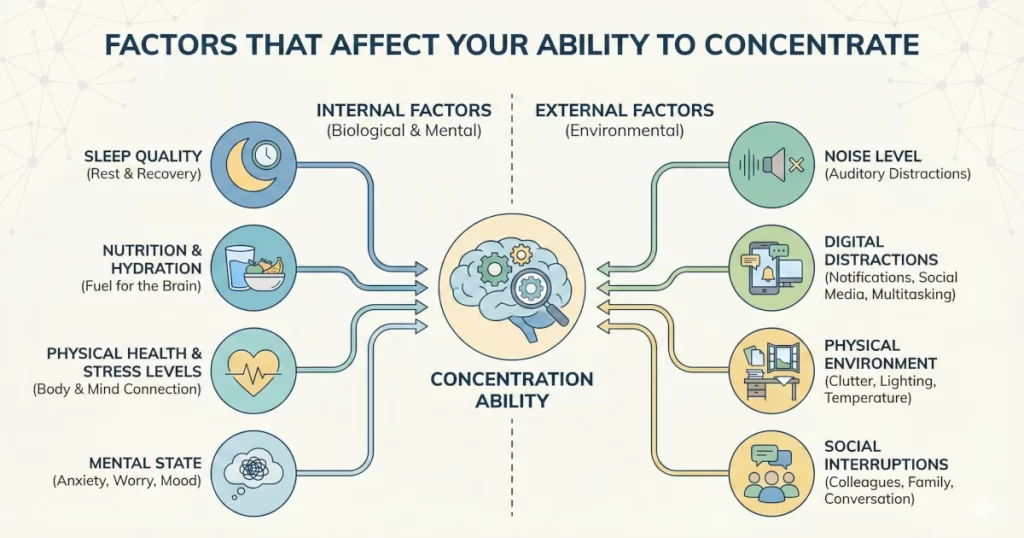
Factors That Affect Your Ability to Concentrate
How well you can focus depends on things inside and outside of you. The way you live, like how much sleep you get and what you eat, can change your cognitive function. The busy digital world around you can also make it hard to stay focused.
It is important to know what affects your mind. The next parts will talk about how your habits and the things near you shape your concentration and how you can make it better.
The Role of Sleep, Nutrition, and Exercise
The way you live has a big effect on your mind. Getting enough sleep is very important. If you do not sleep well, you may find it hard to pay attention, remember things, and make good choices. Most people need 7 to 8 hours of good sleep each night for the brain to be healthy.
What you eat also matters for your mind. Eating meals with lots of fruits, vegetables, and lean proteins can help your mind work better. Along with a good diet, regular exercise or any simple physical activity helps send more blood flow to your brain. This helps with mental clarity and focus.
Even small changes in the way you live can help a lot. Try to get enough sleep, choose better food, and move or walk more each day. These steps can boost your brain health and help keep your mind sharp.
Impact of Technology and Digital Distractions
Today, the use of technology can break your focus. There are many alerts from social media, emails, and apps, and these things can make it hard to do deep work. Cutting down your screen time is a good way to get your focus back.
But technology does not always pull you away. It can also help you focus. There are some apps and tools made to help you use your time well and block those digital distractions. For example:
Website blockers that stop you from going to slow you down
Apps that play background music or white noise to help block out sound
The main thing is to use technology with care. Turn off alerts that you do not need. Set rules for your devices. Use tools that help you reach your goals and do not pull you away from deep work or what matters to you on each day.
Environmental Influences on Mental Focus
The place you are in can really change how well you focus. If the room is messy or there is a lot of background noise, it can make your mind feel all over the place. This makes it hard to get work done. Setting up your own study space every day helps cut down on what can distract you.
Things like hearing cars outside, having family members talk to you, or other sounds can pull your mind away from your work. To stop these problems, look for a quiet spot, try noise-canceling headphones, or let people know when you need quiet focus time.
If you take charge of your environment, you make a calm place in your mind too. When the space is tidy and not too loud, your brain knows it’s time to work. This helps you get into a deep focus and do your best.
How To Improve Focus And Concentration
Building focus is a skill. Like other skills, you start with the basics. If you are just starting out, do not get overwhelmed. The goal is to make small changes. These should be easy to keep up with. This will help you have better focus and stay in the present moment.
This beginner’s guide will show you the first steps. You will learn how to get the right tools and make a good mindset. This will help you get ready to do well. It will also help you work on your sustained attention and improve your cognitive function.
What You Need to Get Started (Tools, Environment, Mindset)
One of the best things you can do to get better focus is to set up your space before you start working. Make sure you have the right tools and a place that helps you stay focused. Think about what you need to work better, and gather those things first.
Essential tools and environmental factors include:
A timer to keep track of work times
Noise-canceling headphones to help block out sounds
A clean and neat study space
The way you think is also very important. Go into your work with a good attitude and believe that you can get better. This helps save your mental energy for the task and stops you from thinking you can’t do it. Having a prepared study space and the right mindset are key to doing your best.
Preparing a Distraction-Free Space
If you want to get better at focusing while you study or work from home, you must make a space with no distractions. Pick one area just for work or study. When you always use the same place, it helps tell your brain it’s time to pay attention.
Keep your desk clean. Only have what you need for your work. Too much stuff on your desk can mess with your thinking. Try to stop background noise by shutting the door or wearing headphones. It is also smart to handle things in the digital world. You can do this by turning off alerts on your phone and your computer.
If you can, put your phone in another room. That way, you will not be so tempted to look at it. Having a quiet, neat, and set space for work is the best way to keep out most things that can take your attention away.
Setting Realistic Goals for Your Focus Journey
To help your brain learn to focus, you need to set goals you can reach. You should not try to focus for hours right away. That might make you feel tired and upset. It is better to start with a short length of time. Pick how long you want to focus, like 15 or 25 minutes, and set a timer for that.
Before you start working, choose your most important tasks. When you know what you are working on, it gets easier to pay attention. Break big projects into smaller steps. This makes your work seem less heavy and will help you keep moving forward.
As your concentration levels get better, you can slowly make your sessions longer. Over time, this will help you build strength in your mind. Then, you will find it easier to handle bigger, harder jobs.
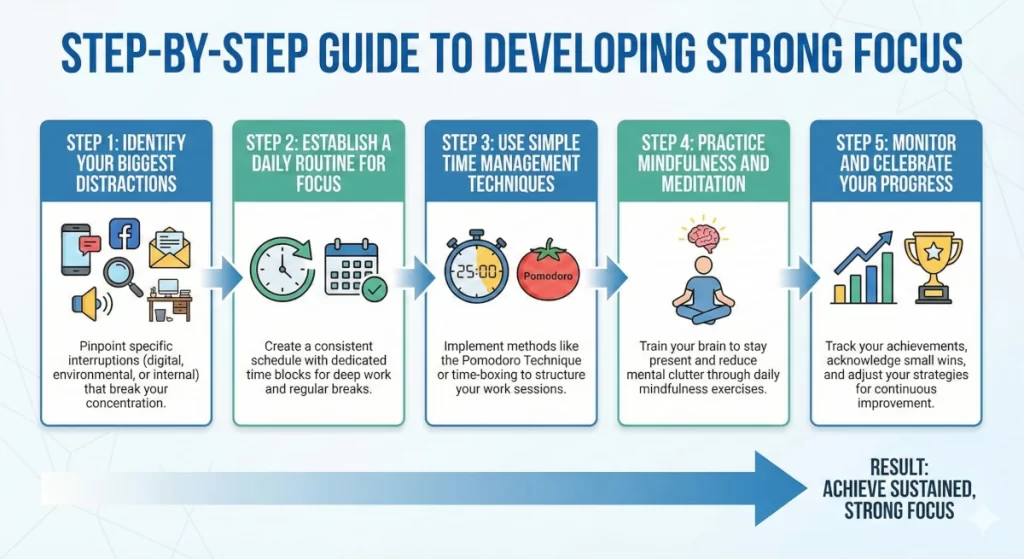
Step-by-Step Guide to Developing Strong Focus
You now have the knowledge you need, so it is time to use it. To get strong focus, take some simple steps and add them to your day. This guide gives you a clear, step-by-step plan that will help you make your attention span longer.
You will start by finding out what takes your mind off your work. You will also try some easy ways to manage time. Each step will bring you closer to getting good at being in the present moment. Let’s begin.
Step 1: Identify Your Biggest Distractions
The first step to cut down on distractions is to spot what takes your attention away. Try to make choices each day about where your focus should be. One good trick to help is to make two simple lists. First, think about the 25 top things you want to get done.
Then, pick and circle your five biggest goals. These five should be what you spend your energy on. The rest of the list is what you need to “avoid at all cost.” Most of these are things that seem helpful, but they take up your screen time, or become social media or other things that just make your wandering mind even busier.
This method helps you choose what matters most and say no to things. For example:
Too much screen time on things that do not really matter
Scrolling through social media without a reason
Answering emails right away, when many are not urgent
Step 2: Establish a Daily Routine for Focus
Being consistent is key when you want to build focus. The best way to do this is to have a daily routine. When you follow a set schedule, you do not have to think so much about what to do next. This simple step helps save your mental energy for the work that needs your full attention. It is good to plan out blocks of time each day just for deep work.
Your daily routine must help you stay well. Make sure you get enough hours of sleep every night because rest is important if you want to keep your sustained attention. Pick one main task each day that is the most important, and let that guide you as you work.
Having a steady plan for your day means you will waste less time on small choices. You will find it is easier to get into strong focus. After some time, this habit tells your brain to get ready for deep work. This helps you give your full attention and gets you used to be in a state of deep focus every day.
Step 3: Use Simple Time Management Techniques
A simple time management strategy can be a game-changer for training your brain. The Pomodoro Technique is a popular method that helps you work with your brain’s natural rhythms. It involves breaking your work into focused intervals, typically 25 minutes long, separated by a short break.
This technique prevents mental fatigue and keeps your mind fresh. After four sessions, you take a longer break to rest and recharge before starting again. It’s an effective way to encourage deep work without burning out.
Using a timer creates a sense of urgency and helps you stay on task. This structured approach to work and rest is one of the most effective ways to build your focus muscle.
The Pomodoro Technique
How It Works
Step 1: Choose a Task
Decide on the single task you will work on.
Step 2: Set a Timer
Set your timer for 25 minutes and work without interruption.
Step 3: Take a Break
When the timer rings, take a 5-minute short break.
Step 4: Repeat
Repeat the cycle. After four sessions, take a longer 15–30 minute break.
Step 4: Practice Mindfulness and Meditation
Mindfulness means you are aware of the present moment. You do this without judging what is happening. It helps train your brain to stay with what you are doing. This makes your concentration levels better. Meditation is one good way to build up mindfulness.
You do not have to meditate for a long time. Try to do deep breathing for a few minutes each day. Go to a quiet spot. Close your eyes. Focus on how the air goes in and out of your body.
A study of 4,715 adults done in 2015 suggested that spending just 15 minutes a day, 5 days a week on brain training activities is enough to improve concentration.
If your mind starts to think about other things, bring it back to your breath. Do this in a gentle way. This will help you get better at keeping your focus. With practice, mindfulness makes it easier to stay calm and with the moment. Even when things are busy, you can be more centered and stay with what you do.
Step 5: Monitor and Celebrate Your Progress
To stay motivated on your focus journey, you need to keep track of your progress. This helps you get feedback and lets you see how far you have come. You can write in a journal or use a simple app to track your progress. Make a note of how long you can focus each day.
Watching your results is not about judging yourself. It is about understanding what is happening. It lets you see what is working well and what is not. You can use this to change your plans when you need to. This keeps you busy with your most important tasks and saves mental energy because you always know what to do next.
You should also celebrate your wins, even if they are small. Getting your most important tasks done, even if it is just for a short time, will help your cognitive performance. When you notice your wins, you build good habits and make the whole process better.
Healthy Habits That Improve Concentration
Being able to focus well is not just about what goes on in your head. You also need a healthy lifestyle for good focus. There is a strong link between how you feel and how well your brain works. The things you do every day, like the way you eat, how much sleep you get, and how much you move, can all make your concentration better.
When you take care of your body, you also take care of your mind. The next parts will talk about good habits that support brain health and give you the energy you need to stay focused for a long time. This will also help your cognitive function.
Nutrition Tips and Brain-Boosting Foods
The food you eat gives your brain the energy it needs. If you want to boost concentration, you need to eat in a way that helps keep your blood sugar steady. It is good for you to get the right nutrients every day. Try not to eat a lot of processed food or too much sugar. These can make your energy go down fast and can give you mental fog.
It helps to put brain-boosting foods into your daily meals. These foods are good for your cognitive function and can help you stay focused during the day. Here are some of the best foods you can try:
Fatty fish, like salmon, have a lot of omega-3 fatty acids in them
Berries, spinach, and other leafy greens, plus vegetables with bright colors
Eggs and whole grains, which give you steady energy
Do not forget to drink enough water every day so your brain stays hydrated. If your brain gets the food and water it needs, it will work well and help you focus. Try to make these easy changes to what you eat to help your brain do its best.
The Importance of Quality Sleep
Getting good sleep is a must if you want a sharp mind. Not getting enough sleep is a big reason people have poor concentration, memory problems, and even start to lose some mental sharpness. When you feel tired from a lack of sleep, your movements slow down, and it gets much harder to focus or work on tough things. It can lead to mental fatigue, too.
Try to get seven to eight hours of sleep each night. This helps your brain fix itself, make memories stronger, and get back the energy it needs. When you sleep well, the blood flow to your brain gets better and you stay safe from the mental fatigue that can hurt your focus and lead to cognitive decline.
To make your sleep better, start a relaxing bedtime habit. Stay away from screens for an hour before bed. Keep your bedroom cool and dark. Go to sleep and wake up at the same time every day if you can, even on weekends. This routine helps your mind and body get the most out of those hours of sleep.
Exercises and Activities for Sharper Mental Focus
Physical activity is a great way to help your mind stay sharp. Doing regular exercise helps your brain release chemicals. These are good for your memory, your concentration, and your mental sharpness. You do not have to run far or fast to see these good changes. Even doing some physical activity can help a lot.
Some things you can do to help your focus:
Go for daily brisk walking or try a quick jog around your neighborhood.
Try yoga or other ways that mix movement and being present in the moment.
Play brain-training games, such as Sudoku, chess, or jigsaw puzzles.
These concentration workouts work both your mind and your body. If you use a mix of physical activity and mental tasks each day, you will help your brain stay quick, interested, and ready to focus.
Start Improving Your Concentration
Building strong focus is very important in today’s world with so many things trying to grab your attention. You need to know what can hurt your focus. These things include the amount of sleep you get, the food you eat, and what is around you. When you know these things, you can find ways to make your mind work better.
Try simple steps in your life. You can build a good daily routine. Try to use mindfulness every day. Keep track of how you do over time. When you do these things, it will help you in the long run. You will see that you can stay focused longer.
Remember, getting better takes time. Be good to yourself and give yourself patience as you go on this path. If this helped you, you should share it on social media so other people can get help too.
Frequently Asked Questions
How can I focus better when working from home or studying?
Make a study space just for yourself. This shows your brain that it is time to work. To keep this place free of distractions, put your phone away and turn off any social media notifications. When you do this, you can give your full attention to the present moment and focus on the work in front of you.
Are there natural ways to boost concentration without medication?
Yes, you can boost concentration in a natural way by adding brain-boosting foods like fatty fish and berries to your diet. Doing deep breathing exercises also helps. Taking part in regular physical activity is important too. It’s simple. These habits give you mental clarity and help you work well. You do not need any medicine as they can make your cognitive performance better.
Which daily habits make the biggest difference in focus?
Having a set routine every day can help a lot. The good news is, small habits matter. Things like getting some physical activity, keeping your screen time in check, and caring for your mental health can help you stay focused during the day.
Can apps or technology really help improve my concentration?
Yes, using technology the right way can help you. There are apps that use the pomodoro method to help you manage your time while you study. But you have to watch out for social media and other social media apps. These things can get in the way and take your focus off your study session.
With over 20 years of experience, Anirban Kundu shares motivational insights on personal growth, productivity, and success. His goal is to help readers build a strong mindset, stay inspired, and take action towards a better life.